Discovery and Initial Research
The first rock drawings were discovered by geographer and local historian Mikhail Michev in 1962 in one of the limestone caves near Tsarevets village, Mezdra region. As Michev was seeking information about the 1762 plague epidemic, he published several old Cyrillic inscriptions, using them as evidence that people from neighboring villages fled the disease and hid in nearby caves. He later hypothesized that a cave monastery existed there. Regardless, until the late 1970s the older drawings were merely mentioned without serious scientific attention. In 1976, historian and epigrapher Stoyan Bogdanov wrote:
From then until now, for fifty years, the petroglyphs near Tsarevets remained forgotten. In 2023-2024, the adventure club "Edelweiss" undertook photographing the drawings and created an eco-trail leading to the caves. In two consecutive publications, Nedyalko Ovcharov and Hristo Hristov published photographs and provided a brief history of research at this site.
New Discoveries Along the Iskar River
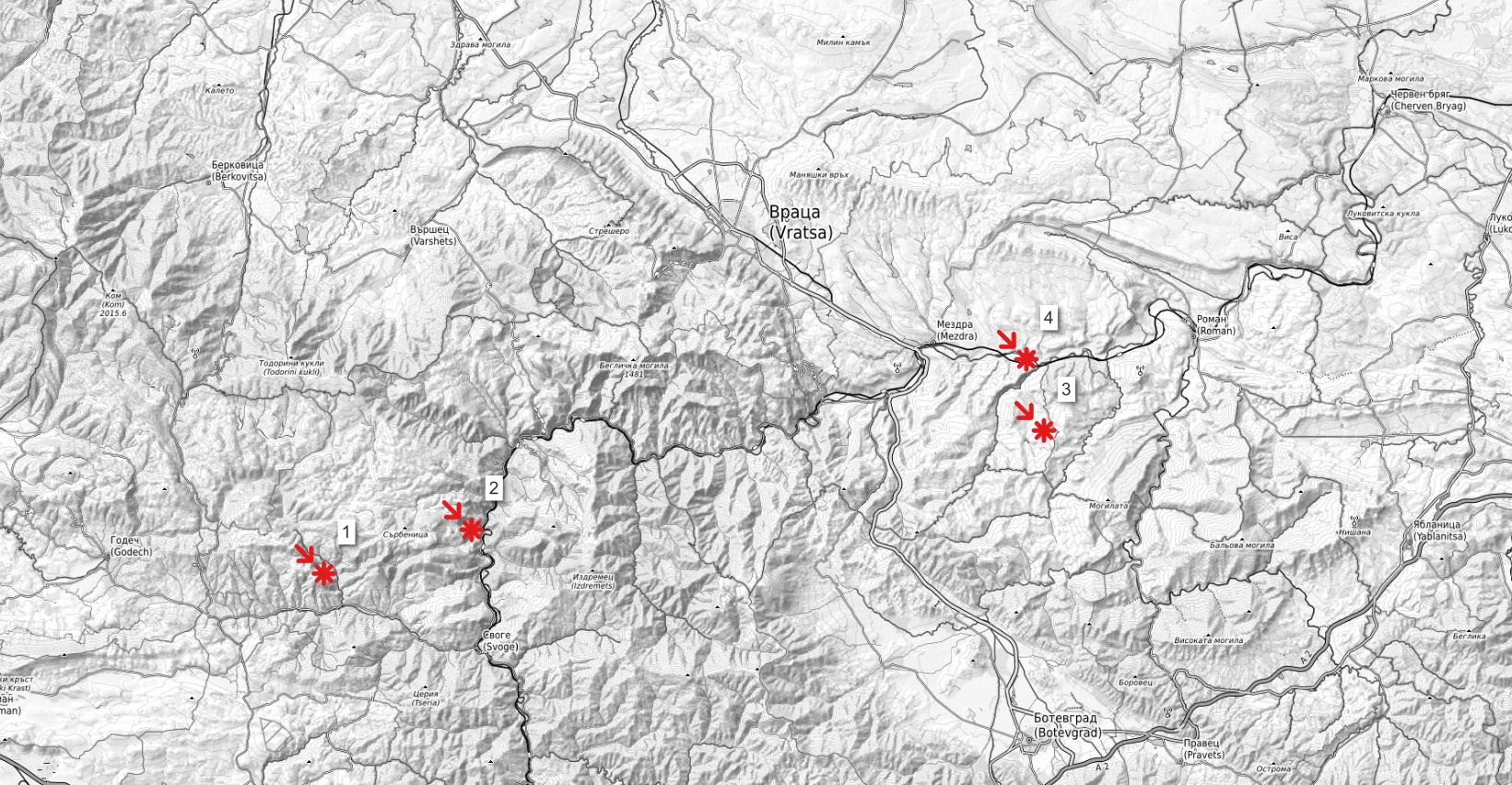
Despite these efforts, the petroglyphs remained largely unknown. This continued until 2020, when just 4 km south of the Tsarevets caves, a new rock sanctuary with petroglyphs was discovered near Oslen Krivodol village. The unusual symbols caught the attention of a local resident, and village mayor Roman Ivanov immediately alerted the regional museum. Initial specialist impressions suggested a Thracian cult center. Excavations were promised, but progress stalled. An eco-trail was built, attracting tourists, yet the lack of adequate scientific documentation hindered these unique monuments from taking their rightful place in Bulgarian and global scholarship.
More discoveries followed along the Iskar River: in 2025, the "Pod Raba" Caving Club found petroglyphs near Skaklya waterfall in Zasele. In 2026, the "Iskar" Caving Club stumbled upon red ochre drawings above Breze village.
The Bulgarian Archaeological Society "Ivan Venedikov" took the initiative to gather and synthesize all information from these four sites to compare their similarities, differences, and chronological contexts.
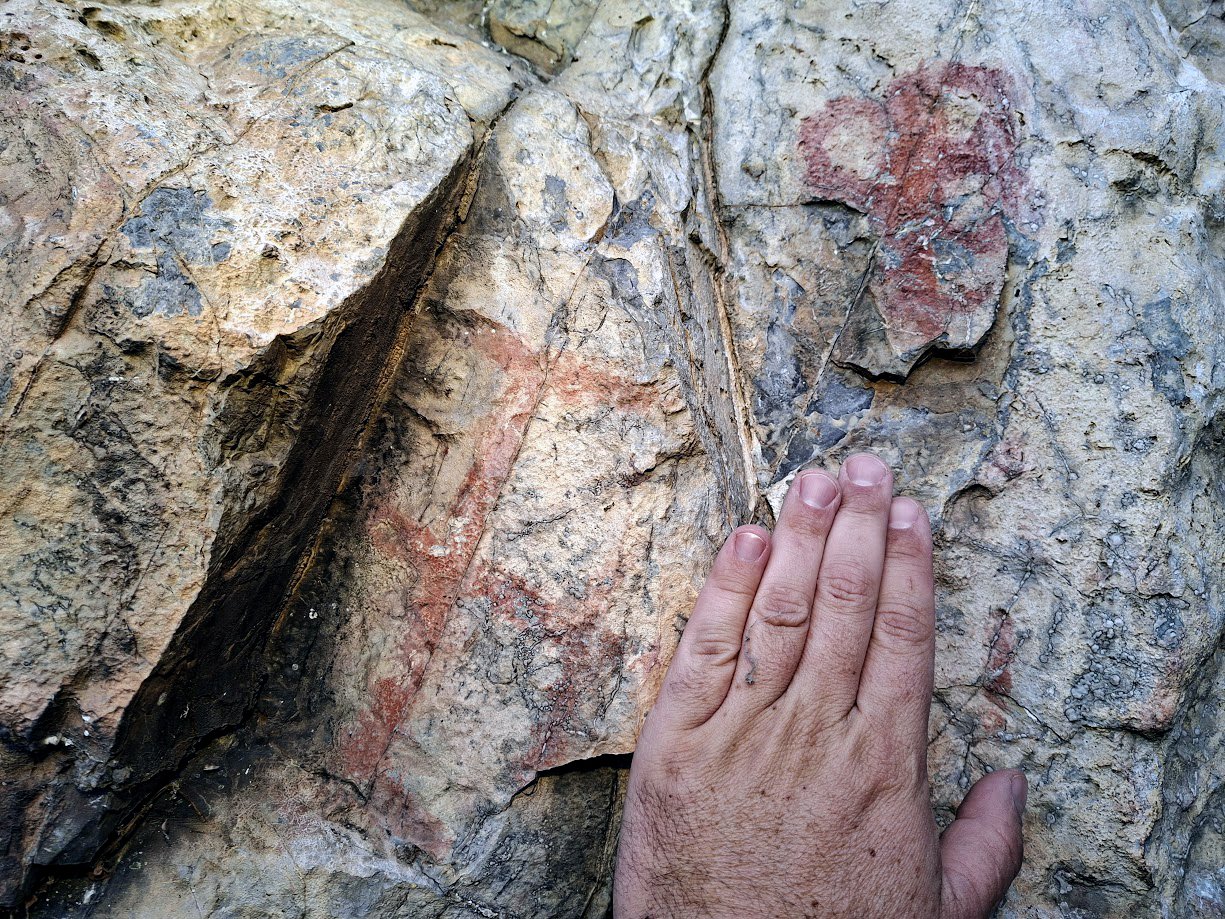
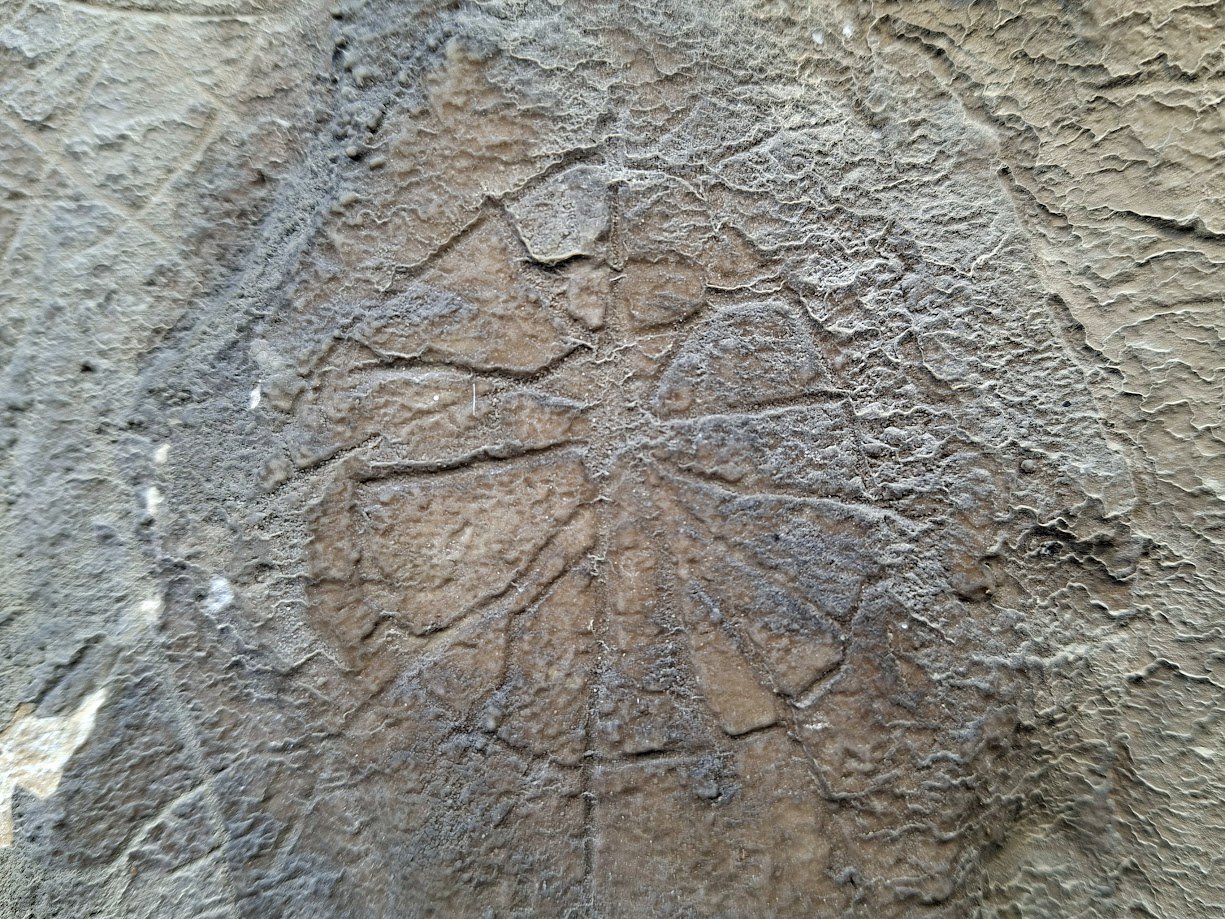
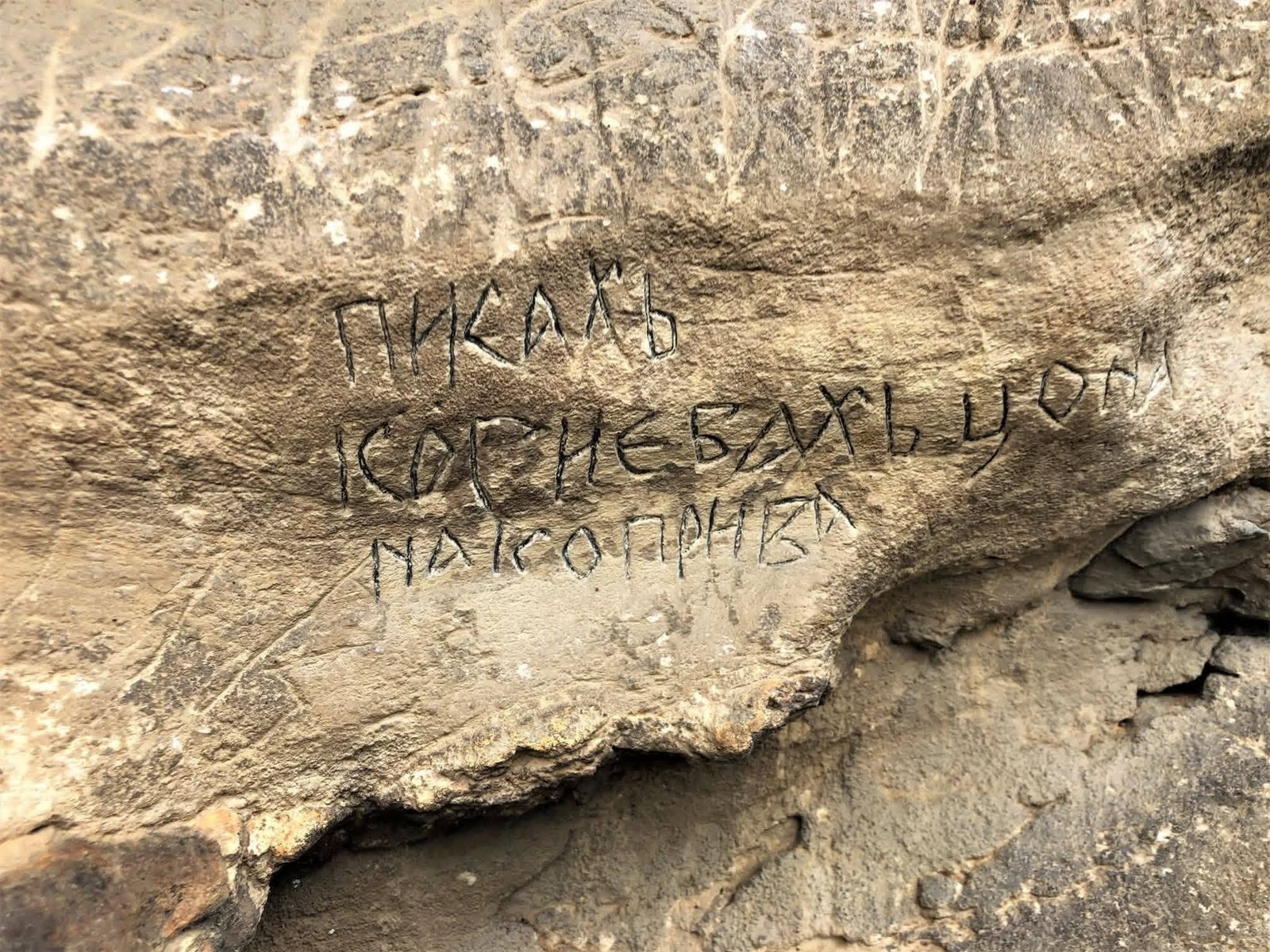
Interpretation is left as the final step. We possess the physical material record, not the spiritual one. Not everything needs to be interpreted as purely "religious". For instance, among the inscriptions in the Tsarevets caves, the following text is documented:
Try reading the text from the rock photographs below – the letters are close to modern Cyrillic:

Are the Drawings Medieval?
In 1982, archaeologist Dimitar Ovcharov compiled all known graffiti drawings from Bulgaria in a comprehensive book (367 pages). He included several images from the Tsarevets caves, dating them to the Early/Late Middle Ages and Ottoman period (8th-18th c.). Ovcharov published images accompanied by inscriptions that were demonstrably late medieval.
However, the renowned archaeologist omitted a vast number of petroglyphs that clearly do not belong to the medieval era. The reasons for this distinction are evident:
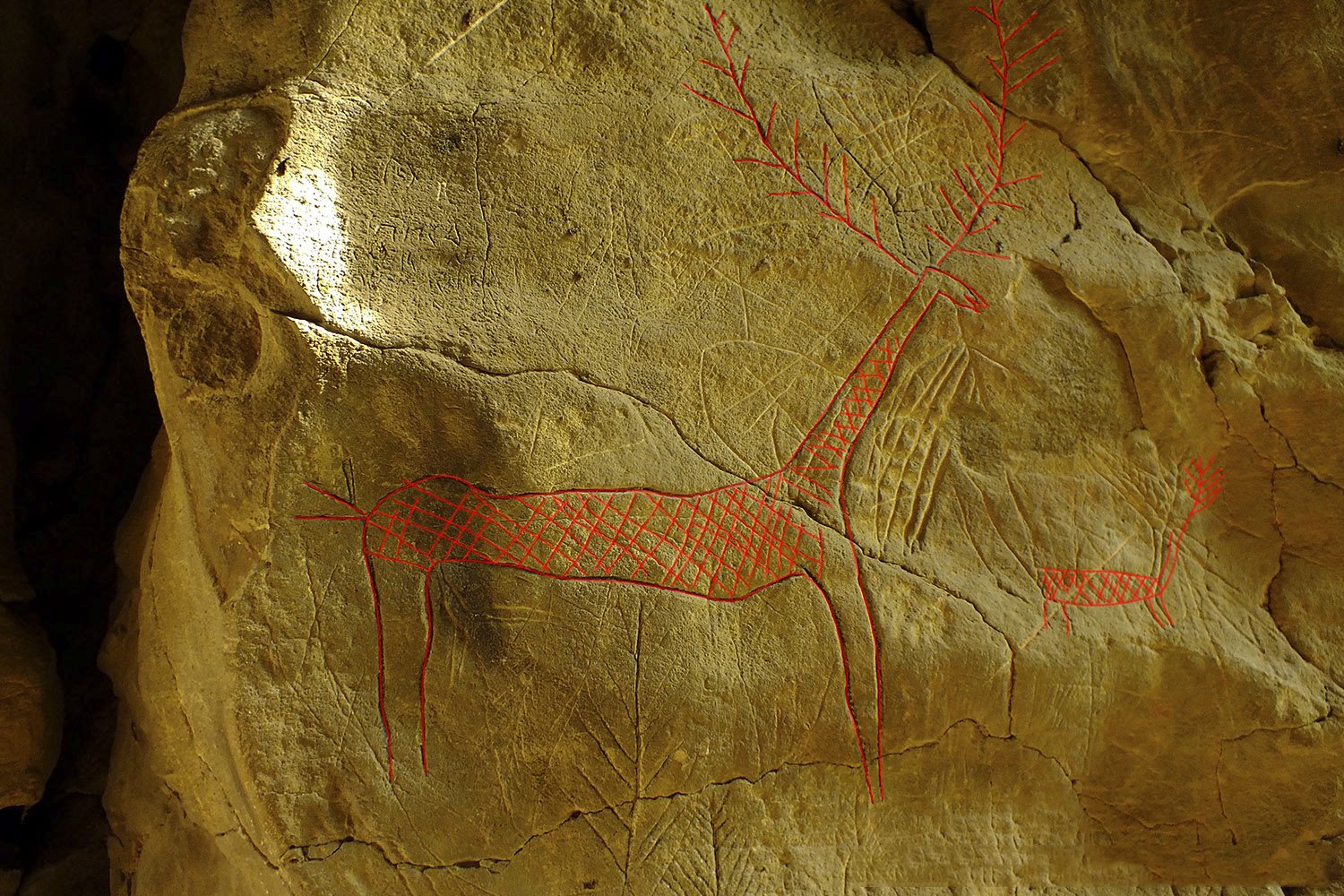
Distinct Style and Execution
Older drawings exhibit fundamentally different styles, proportions, and artistic execution compared to medieval graffiti.
Difference in Tooling and Depth
Medieval graffiti are deeply incised with metal tools, whereas earlier petroglyphs are shallow, carved with softer flint or stone in an era preceding metallurgy.
Stratigraphy and Palimpsest Overlapping
Medieval drawings and inscriptions are carved OVER the older petroglyphs. Layering of strokes one above another is clearly visible under magnification.
Absence of Martial and Equestrian Scenes
None of the older petroglyphs depict horses or riders (scenes abundant in medieval graffiti). No weapons (bows, spears, swords) appear in the early layer.
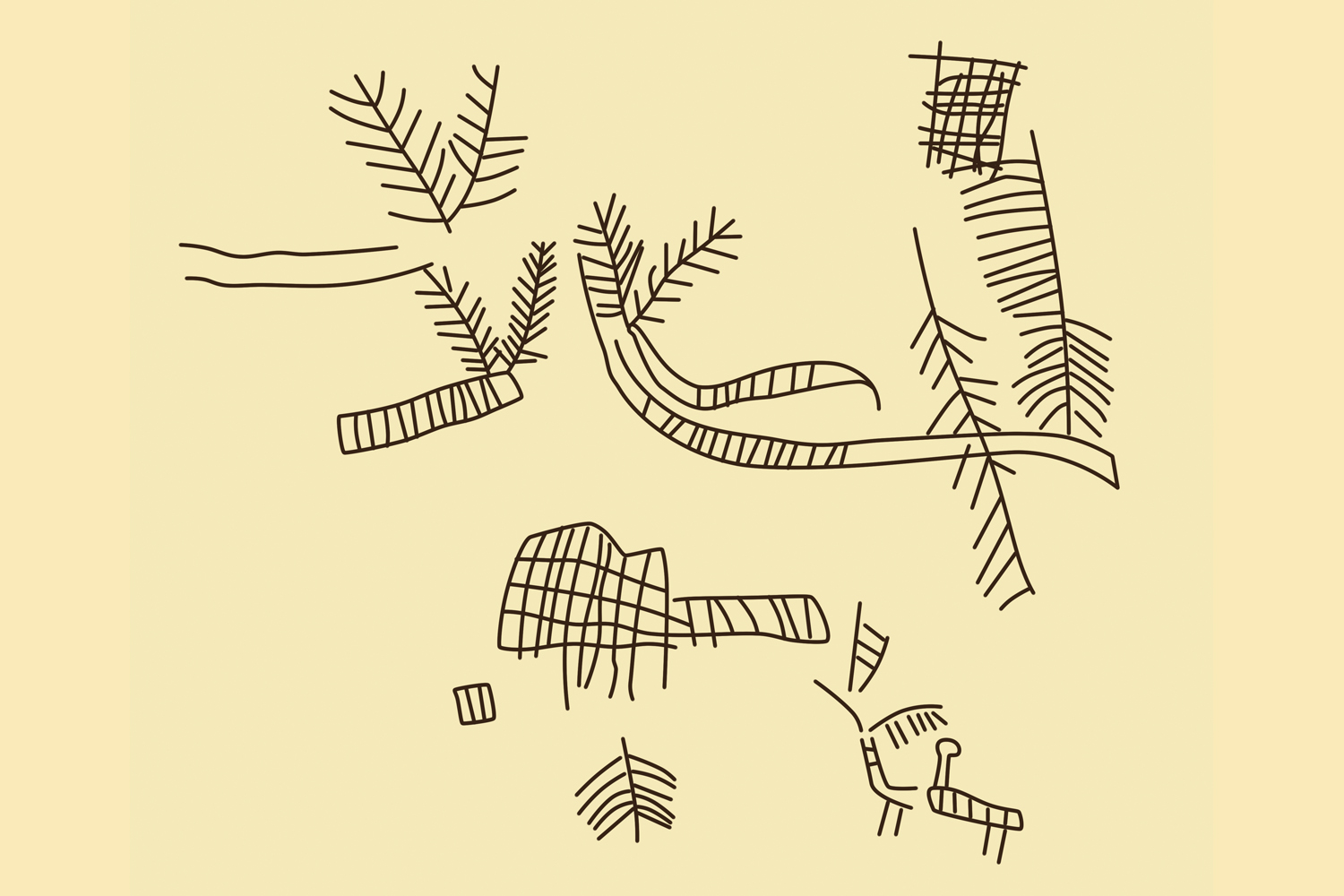
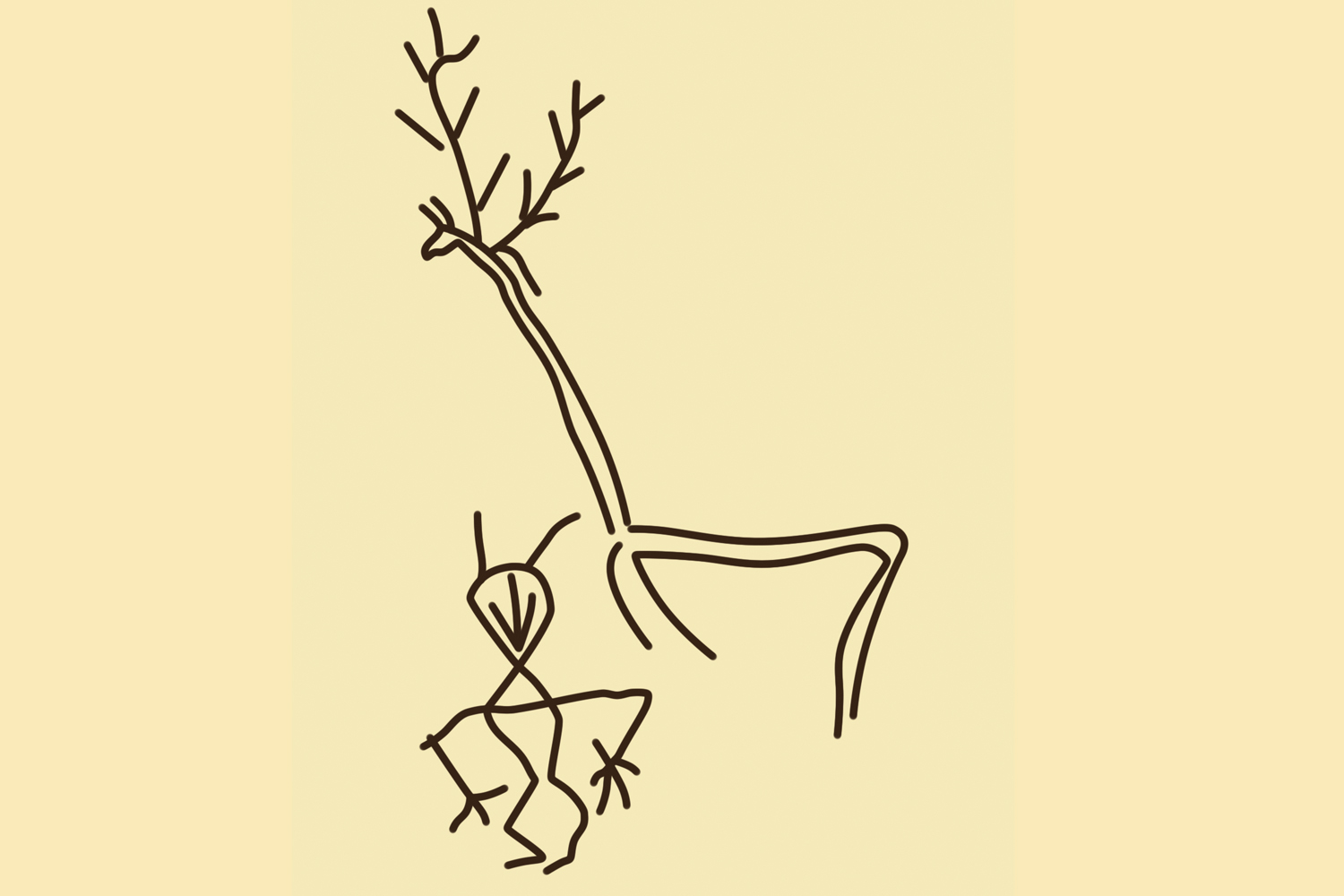
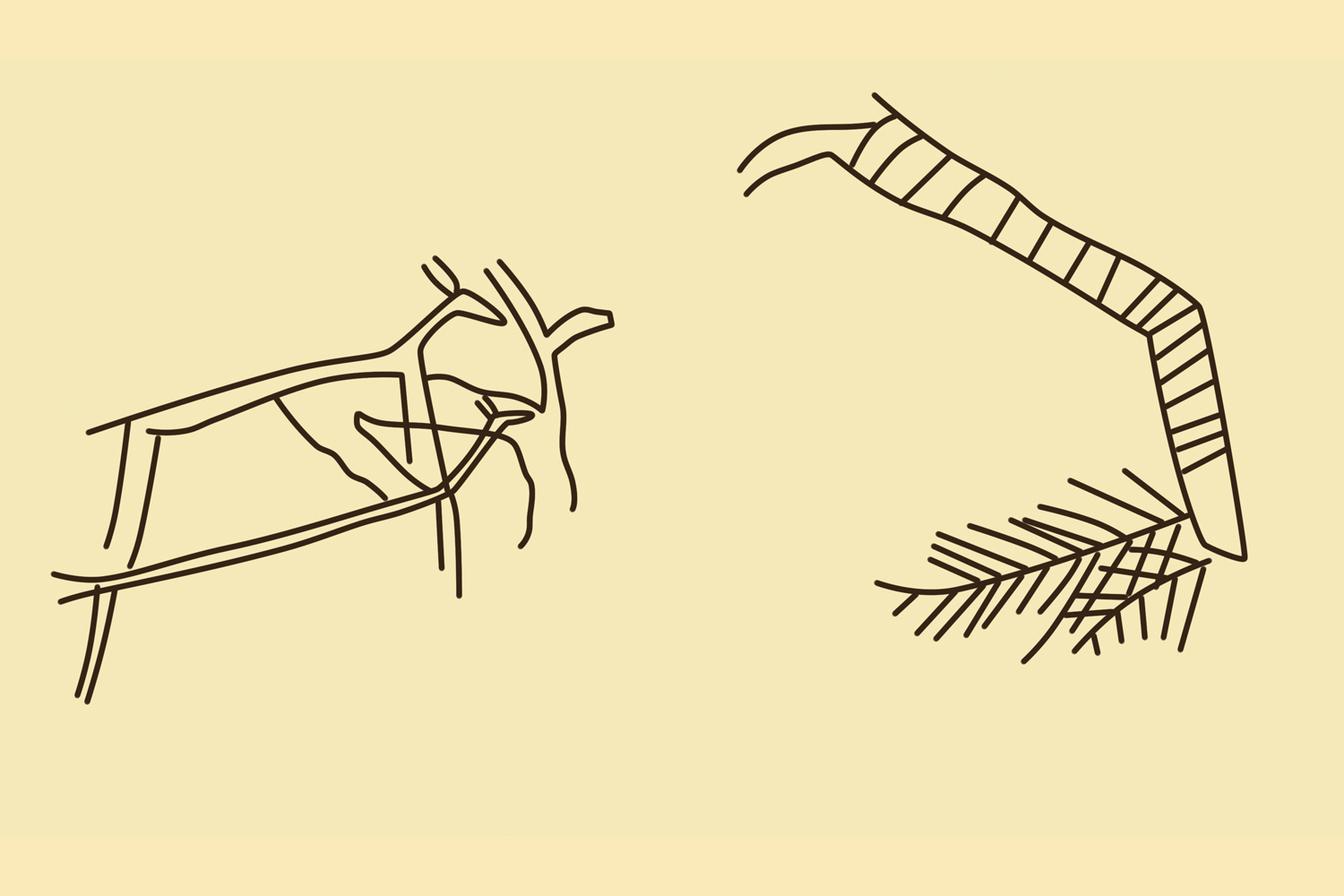
Petroglyphs found at Zasele share these exact characteristics. Furthermore, certain symbols (leaf motifs, grid nets) are identical to those at Tsarevets and completely absent from medieval rock art.